The Monday Morning Routine
What CounterCtrl removes from Monday morning isn't data. It's the reassembly.
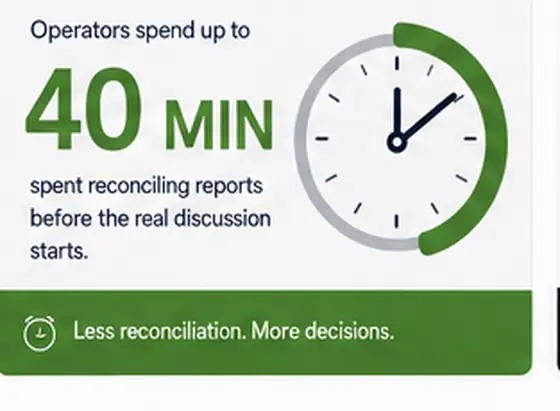
I've watched a lot of Monday mornings in this business, and the routine is almost always the same.
A store director opens one system for sales, another for damages, a third for throwaways, a fourth for reclaim credit. Each has its own login, its own export format, its own definition of numbers that should mean the same thing. By the time everything's been pulled into one spreadsheet and the totals actually agree with each other, it's Wednesday — and the week the report was supposed to inform is already half over.
The frustrating part was never that the data was missing. It's all there, sitting in systems that work fine on their own. The cost is the two or three hours somebody spends every week turning four disconnected exports into one number they can trust.
That gap between having the data and being able to act on it is exactly what we built CounterCtrl Cloud to close.
Two design decisions do most of the work. First, every number in CounterCtrl carries its own comparison — this week, last week, this week last year — built directly into the view, so nobody has to go find the context that makes a number meaningful. Second, and less visible but more important: before a single store goes live, we validate our numbers against the customer's existing numbers until they match. That validation step is the one most vendors skip, and it's the one that actually earns trust. If the number on the CounterCtrl screen doesn't match the number the store director already believes, nothing else about the product matters.
Once that trust is established, Monday morning stops being an assembly job. The director opens one screen, the numbers are already reconciled and already compared, and the two hours that used to go to arithmetic go to the actual question: what do we do about it.